Practice Setting

Updated: Jun 21
My experience as an Art Educator teaching at two Title I schools.
Title I Art Educator
I teach elementary art in Kalamazoo, MI at two schools, about 2.5 miles from one another: Northeastern Elemenary and Lincoln International Studies Elementary. During the school year I teach about 500 students a week, 4 days at Lincoln and 1 day at Northeastern. Both elementaries are based in the Kalamazoo Public Schools district, which is one of the most diverse districts in the region. According to the district website there is no single racial group making up the majority, speaking over 60 languages at home. The student body as a whole represents a significant socioeconomic diversity, with roughly 50% of students qualifying for federal free/reduced meals.
While KPS itself is not made up by one entire race, the two schools in which I teach are predominantly Black. Located on the East and North end of town, both schools are positioned in areas high in poverty, crime, and violence. Majority of my students come from a low-income family, and receive assistance from the governement. Both school populations are high in need, and as a result receive a Title I fund— which aims to ensure children have an equal opportunity at achieving academic standards.
Most children living in these areas come to school needing much more than just an education. As an educator, being spatially aware of the environment my students come from informs my practice immensely. Creating a classroom culture where the needs of my students are at the forefront, has proven to be the formula for creating meaningful art.

Lincoln International Studies Elementary
I am the art teacher for 100% of the population at Lincoln, which is roughly 320 kids K-5. While more than half of our student population is Black, we are still one of the most diverse schools within the district. This is a very special elementary school, as it is the prime location for young multi-lengual learners. 41% of our students come from a foreign country and speak a different language at home, many coming from parts of Africa (Senegal, Cameroon, Ethiopia, etc), The Middle East (Jordan, Iraq, Iran, Syria, etc), Latin regions (Venezuala, Guatemala, Mexico), Afhganistan, and a plethora of other cool places. I have students who speak Arabic, French, Farsi, Swahili, Spanish, Parsi, the list goes on and is quite amazing. Our school is rich in culture and exposes students to a variety of lens, which really helps to expand their perception of the world around them.

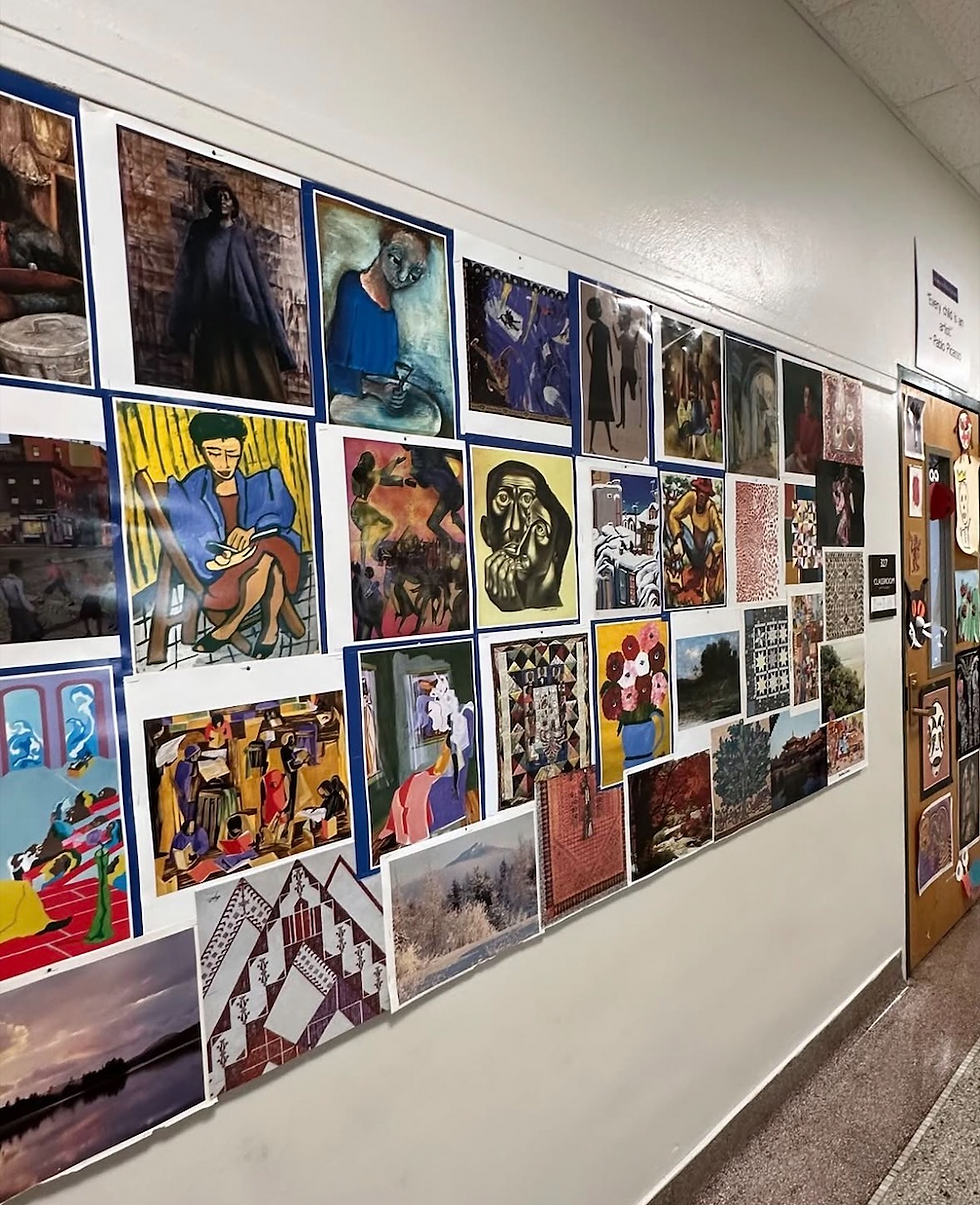
When decorating my classroom, I was intentional about creating a space that highlighted the beauty found within diversity. My walls are full of art, showcasing the work of artists from different cultures: African Masks, Palestinian Art, Harlem Renaissance Paintings, Modern Art, Dadaists, Fauvists, Impressionist, etc. — an environment meant to inspire.
As I teach my Lincoln students the fundamentals of art, my overarching goal is to ensure they perceive art as both a skill and a tool. Building an understanding around art and its ability to transform people, places, spaces, and even objects— that art making can give our surroundings meaning, and reveal the beauty within our struggles.
Northeastern Elementary
Northeastern Elementary is considered my secondary school, meaning I only teach about 60% of their student population (another art teacher is in charge of the remaining 40%). This is a smaller school, with a total of only 8 classes— I teach 6 out of the 8, which is roughly 200 kids total K-5. While I am only here one day out of the week, this particular school holds a very special place in my heart as it is the school I attended as a child.

Although its been 20 years since being in elementary, not much has changed between then and now. Just as it was when I attended, about 90% of the students are Black. Similar to my practice at Lincoln, coming from the same exact neighborhood as my Northeastern students allows me to connect with them on a deeper level. Aware of the obstacles they face outside of the classroom creates a bond between them and I within the classroom, which creates a meaningful art making experience.
Classroom Environment
Taking into account student demographics, majority of the assignments facilitated are in relation to our lives and the abundance of cultures around us.
Working day to day as an art teacher, my focus is to establish an environment rich in perspectives, acceptance, and awareness. Teaching the young to give life meaning through the use of art.


Comments